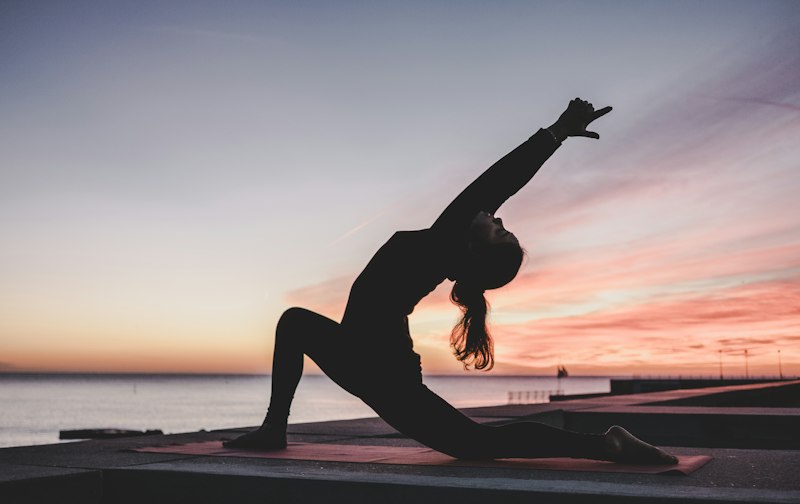
Starting your day with a gentle yoga routine can transform not just your morning, but your entire day. A focused sequence of poses helps wake up stiff muscles, clears mental fog, and sets a calm, intentional tone for whatever lies ahead. This beginner-friendly routine requires no equipment beyond a yoga mat and takes just 15 to 20 minutes from start to finish.
Why Morning Yoga Works
After hours of sleep, your body is naturally stiff. Your spine has been compressed, muscles have been inactive, and your mind is transitioning from rest to wakefulness. Morning yoga addresses all three simultaneously. Gentle movement lubricates joints, lengthens muscles that shortened overnight, and deep breathing oxygenates your system far more effectively than reaching for coffee ever could.
Research consistently shows that people who exercise in the morning are more likely to maintain the habit. By completing your practice before the day's demands take over, you guarantee that self-care doesn't get pushed aside. The mental clarity and reduced stress levels you gain carry through your work, interactions, and decision-making for hours afterward.
Essential Equipment for Your Practice
While yoga requires minimal gear, having the right foundation matters. A quality yoga mat provides cushioning for joints and prevents slipping during poses. For beginners, a slightly thicker mat (around 5mm) offers better knee and wrist support while you build strength and flexibility.

Premium Non-Slip Yoga Mat
A quality mat with extra cushioning protects knees and wrists during floor poses. Look for non-slip texture and eco-friendly materials like natural rubber or TPE.
View on Amazon →The 10-Pose Morning Sequence
This sequence flows naturally from one pose to the next, warming up your body gradually. Hold each pose for 5 to 10 breaths unless otherwise noted. Move slowly and breathe deeply throughout.
1. Child's Pose (Balasana)
Balasana — The resting pose
Start on your hands and knees. Bring your big toes together and sit back on your heels. Separate your knees about hip-width apart and fold forward, extending your arms along the floor or resting them alongside your body. Let your forehead rest on the mat.
Benefits: Gently stretches the hips, thighs, and lower back. Calms the nervous system and encourages mindful breathing from the start.
2. Cat-Cow Stretch (Marjaryasana-Bitilasana)
Marjaryasana-Bitilasana — Spine mobility flow
Transition to hands and knees in a tabletop position. Inhale as you drop your belly, lift your chest, and gaze forward (Cow). Exhale as you round your spine toward the ceiling, tuck your chin, and draw your navel toward your spine (Cat). Alternate smoothly for 8 to 10 cycles.
Benefits: Mobilizes the entire spine, warms up back muscles, and synchronizes breath with movement.
3. Downward-Facing Dog (Adho Mukha Svanasana)
Adho Mukha Svanasana — Full-body stretch
From tabletop, tuck your toes and lift your hips toward the ceiling. Keep a slight bend in your knees initially. Press your hands firmly into the mat and rotate your upper arms outward. Let your head hang relaxed between your arms.
Benefits: Stretches hamstrings, calves, shoulders, and hands. Builds upper body strength and improves circulation to the brain.
4. Standing Forward Fold (Uttanasana)
Uttanasana — Calming forward bend
Step or walk your feet to the top of your mat. Fold forward from your hips, keeping knees slightly bent. Let your head and arms hang loose. You can hold opposite elbows and gently sway side to side.
Benefits: Stretches the entire back body, releases neck tension, and encourages blood flow to the head for mental clarity.
5. Mountain Pose (Tadasana)
Tadasana — The foundation of standing poses
Stand with feet hip-width apart, weight distributed evenly across both feet. Engage your thighs, tuck your tailbone slightly, and roll your shoulders back and down. Let your arms hang naturally with palms facing forward.
Benefits: Improves posture, body awareness, and mental focus. A moment of stillness to set an intention for your day.
6. Warrior I (Virabhadrasana I)
Virabhadrasana I — Powerful standing pose
Step your left foot back about 3 to 4 feet. Turn your left toes out at a 45-degree angle. Bend your right knee directly over your right ankle. Raise both arms overhead, palms facing each other. Hold for 5 breaths, then switch sides.
Benefits: Strengthens legs and core, opens hips and chest, builds confidence and mental focus.
7. Warrior II (Virabhadrasana II)
Virabhadrasana II — Expansive strength
From Warrior I, open your hips and shoulders to the side. Extend your arms parallel to the floor, front arm reaching forward and back arm reaching behind. Gaze over your front fingertips. Hold for 5 breaths, then switch sides.
Benefits: Builds stamina, opens hips and chest, improves concentration. Feel your strength and stability.

8. Tree Pose (Vrksasana)
Vrksasana — Standing balance
Stand on your right leg. Place your left foot on your inner right thigh or calf (avoid the knee). Bring your hands to prayer position at your heart or extend them overhead. Find a fixed point to gaze at for balance. Hold for 5 to 8 breaths, then switch sides.
Benefits: Improves balance and focus, strengthens ankles and legs, builds mental concentration.
9. Seated Spinal Twist (Ardha Matsyendrasana)
Ardha Matsyendrasana — Revitalizing twist
Sit with both legs extended. Bend your right knee and cross your right foot over your left leg. Hug your right knee with your left arm and place your right hand behind you. Inhale to lengthen your spine, exhale to twist gently to the right. Hold for 5 breaths, then switch sides.
Benefits: Stretches the spine, shoulders, and hips. Stimulates digestion and detoxification. Twists are excellent for releasing tension held in the back.
10. Corpse Pose (Savasana)
Savasana — Final relaxation
Lie flat on your back with legs extended and feet falling outward. Let your arms rest alongside your body with palms facing up. Close your eyes and relax every muscle. Stay here for 3 to 5 minutes, breathing naturally.
Benefits: Integrates the benefits of your practice, reduces blood pressure and heart rate, promotes deep relaxation and mental clarity.
Breathing Techniques for Stress Relief
Breath is the bridge between your body and mind. Incorporating conscious breathing amplifies the stress-relieving benefits of your practice. Try these techniques:
Dirga Pranayama (Three-Part Breath)
Place one hand on your belly and one on your chest. Inhale slowly, filling your belly first, then your ribcage, then your upper chest. Exhale in reverse order. This full, deep breathing activates your parasympathetic nervous system, signaling safety and relaxation to your body.
Nadi Shodhana (Alternate Nostril Breathing)
Use your right thumb to close your right nostril. Inhale through the left. Close both nostrils briefly, then release the right and exhale through the right. Inhale through the right, close both, then exhale through the left. Continue for 5 to 10 rounds. This technique balances the nervous system and clears mental fog.
Tips for Building a Consistent Practice
- Start small: Commit to just 10 minutes. Consistency matters more than duration when forming a new habit.
- Same time, same place: Practice at the same time each morning in the same spot. Environmental cues reinforce habits.
- Let go of perfection: Some mornings you'll feel stiff or distracted. Practice anyway, even if modified. A shortened session beats no session.
- Listen to your body: Discomfort is normal; pain is not. Back off from any position that causes sharp or shooting pain.
- Hydrate: Drink a glass of water before and after your practice to support muscle function and recovery.
Recommended Gear to Enhance Your Practice
Beyond a quality mat, a few simple props can make poses more accessible and comfortable, especially for beginners.

Yoga Block and Strap Set
Blocks bring the floor closer to you in standing folds and seated poses. Straps help with tight hamstrings in seated stretches. Both are inexpensive and incredibly helpful for beginners.
View on Amazon →
Foam Roller for Recovery
Using a foam roller after yoga releases muscle tension and improves flexibility over time. Roll out major muscle groups for 5 to 10 minutes after your practice.
View on Amazon →Common Questions About Morning Yoga
Should I eat before morning yoga?
Practice on an empty or lightly settled stomach. A small piece of fruit or a few sips of water is fine if you feel lightheaded, but avoid a full meal. You'll move more freely and avoid digestive discomfort during twists and forward folds.
What if I'm not flexible?
Yoga builds flexibility; it doesn't require it as a prerequisite. Every practitioner starts exactly where they are. Use props, bend knees generously, and focus on how each pose feels rather than how it looks. Flexibility develops over weeks and months of consistent practice.
Can I practice if I have back pain?
Gentle yoga often helps mild to moderate back pain by strengthening core muscles and improving mobility. However, consult your healthcare provider first if you have a diagnosed condition or acute pain. Modify poses and avoid anything that increases discomfort.
How long until I notice benefits?
Most people feel mentally clearer and physically looser after just one session. Measurable improvements in flexibility and strength typically show within 2 to 4 weeks of consistent practice. The stress-relief benefits compound over time.
Conclusion
A morning yoga routine is one of the highest-return investments you can make in your physical and mental health. This 10-pose sequence wakes up your body, clears your mind, and grounds you before the day's demands begin. With just a yoga mat and 15 to 20 minutes, you build flexibility, reduce stress, and cultivate a sense of calm that carries through everything that follows.
Roll out your mat tomorrow morning. Your body and mind will thank you.